
New or remote members have few shared touchpoints

A team that never shares a room only knows each other through scheduled meetings, and scheduled meetings are usually agenda-driven, which leaves no space for the small exchanges — what someone's working on, what's going wrong, who's swamped — that let colleagues read each other accurately. Wikipedia's overview of team building traces the practice back to organizational psychology research on group cohesion and performance, and the common thread across that research is that trust and coordination grow out of repeated, low-stakes contact, not a single event.
The visible cost of thin contact is that communication stays shallow and work happens in silos: people default to emailing only the person they already know rather than the person who actually has the answer, and problems get solved twice by two people who didn't know the other was on it.
The lowest-cost fix is to run a short icebreaker or five-minute activity at the start of regular meetings rather than treat team building as a separate event. Bryant University's list of five-minute activities is built around exactly this constraint — exercises short enough to open a standing meeting without displacing the agenda, which matters because a distributed team's meetings are already one of its few shared touchpoints. Examples that fit inside five minutes:
- A rotating "one thing I'm stuck on" round, capped at thirty seconds each
- Two truths and a lie, run as a standing opener for new joiners
- A quick poll question unrelated to work, answered before the meeting starts
Done weekly, this gives members enough context on each other that they volunteer information more readily outside the meeting too — someone who knows a colleague is buried in a deadline is more likely to flag a blocker early rather than wait for it to become a crisis. The practical appeal for a manager is that it needs no budget, no venue and no off-site day; it's a two-minute addition to a call that's already on the calendar.
Team struggles to solve problems jointly under pressure
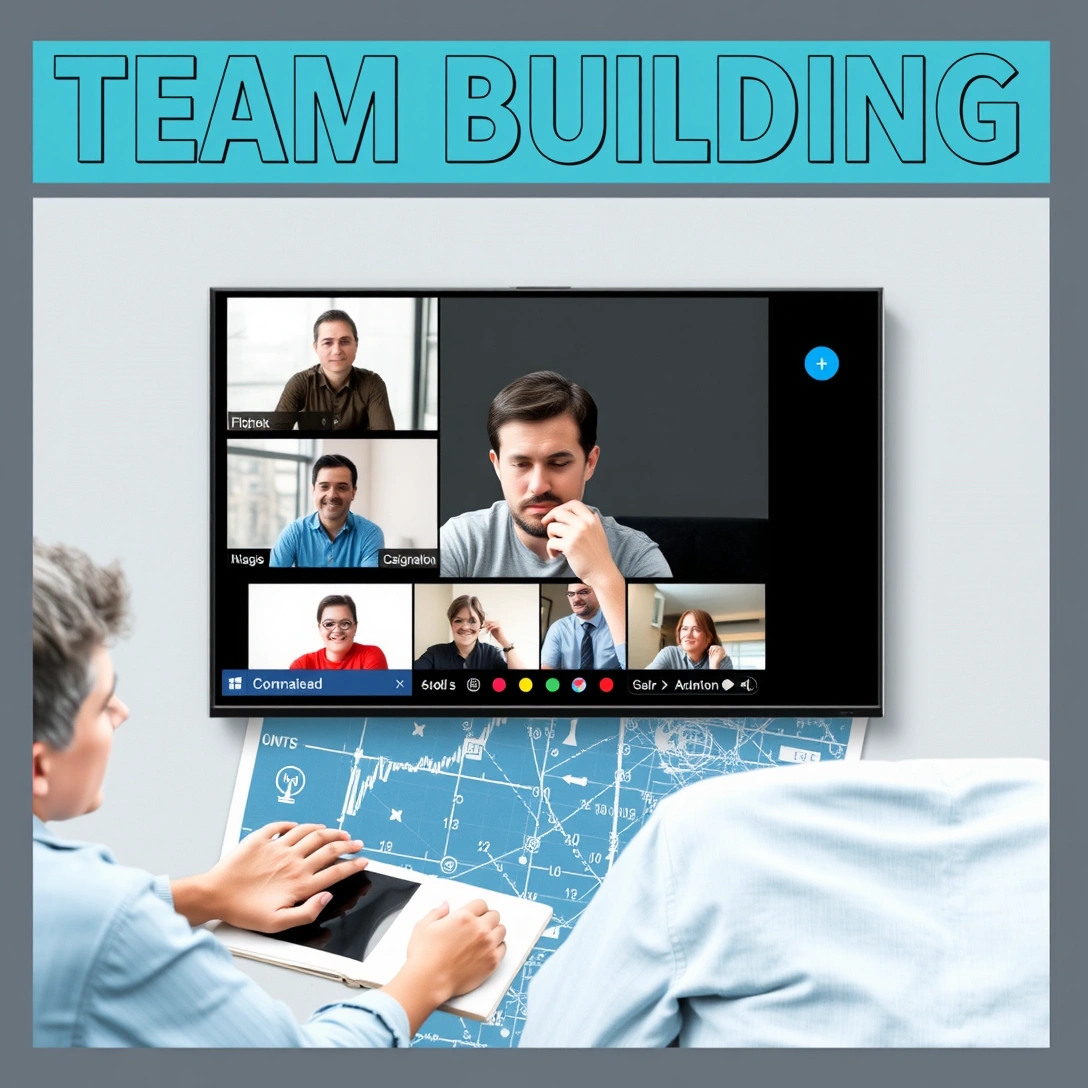
If a team defaults to individuals grinding on a problem alone rather than pooling effort, the fix is a structured joint task, not a lecture on collaboration. That pattern shows up as duplicated effort — two people quietly redoing the same analysis — and stalled decisions, where nobody wants to commit without checking with everyone else first, so nothing moves.
A timed problem-solving challenge, such as an escape-room-style puzzle or a scenario exercise with a hard deadline, forces the team to divide labor, share partial information, and commit to a decision under a constraint that mirrors real project pressure. Slack's roundup of company team-building activities and SessionLab's exercise library both catalogue variants of this format, from physical puzzle rooms to remote scenario simulations, and the mechanic is the same regardless of setting: a shared goal, a countdown, and no way to solve it as separate individuals.
What actually converts the exercise into a transferable skill is the debrief immediately after, and this is the step most activity lists skip. A short debrief should ask:
- What decision took longest to make, and why?
- Who had information the group needed but didn't offer it early — and what stopped them?
- Which of these behaviors showed up in a real project this quarter?
- What would we do differently in that meeting next time?
Without step 3 and step 4, the exercise stays a fun hour that people remember fondly and change nothing because of. With them, it becomes a specific, named behavior — "surface blockers earlier," "assign an owner before debating" — that the manager can reference the next time the team stalls on a real decision.
Distributed team has no shared room
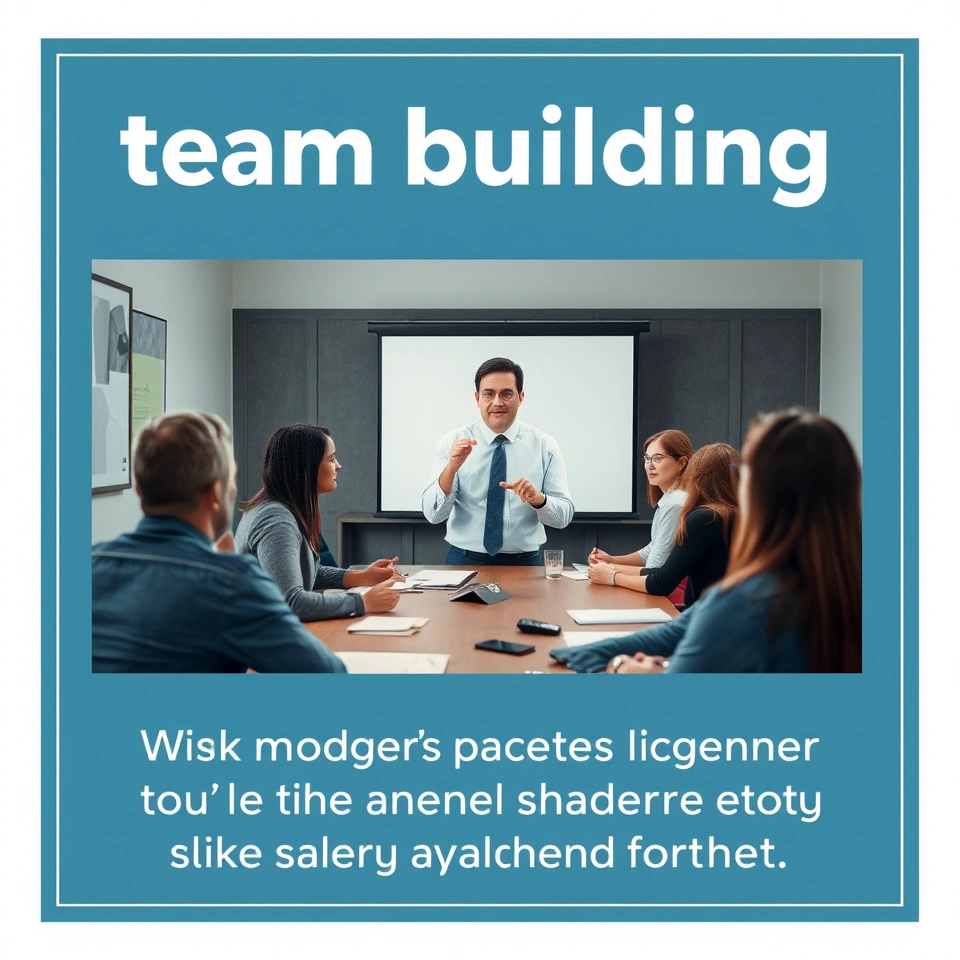
Standard team-building games assume physical props, a shared table, or people moving between stations, and none of that survives a switch to video call. A trust fall, a room-based scavenger hunt, or a whiteboard exercise built around people standing at it together simply doesn't translate, so the first filter for a fully remote team is whether an activity was designed for video from the start rather than adapted awkwardly from an in-person format.
Virtual-native substitutes exist for most of the standard categories — icebreaker prompts run through breakout rooms, collaborative documents replacing shared whiteboards, and timed puzzles solved over screen share. Bryant's five-minute list and SessionLab's library both include activities built specifically for video calls rather than retrofitted, which is the detail worth checking before picking one: an exercise that needs people to see a physical prop or move around a room will underperform on a call regardless of how well it works in person.
The second filter is length. Video calls carry a documented fatigue cost that in-person meetings don't, so an activity that would run fine for forty-five minutes in a conference room needs to be cut down for a remote session — shorter rounds, fewer participants speaking at once, and a hard stop. A manager filtering a generic activity list for a remote team should ask two questions of every item on it: does this require a shared physical space, and can it be run in the time before people's attention on the call drops off.
Activity is chosen for fun alone and imposed on the team
An activity picked because it looks fun on a vendor's list, with no stated connection to a problem the team actually has, reads to the team as mandatory fun rather than a useful use of their time — and mandatory fun is one of the more reliable ways to damage trust rather than build it. Berkeley's People & Culture guidance on building effective teams frames team building as one step in a broader process of setting goals and clarifying roles, not a standalone event, which is the piece that gets lost when an activity is chosen for its entertainment value alone.
The fix is to match the activity to three things before picking it: the team's actual size, the time genuinely available, and a stated goal tied to a real problem — thin communication, stalled decisions, unfamiliarity among new hires. An icebreaker solves unfamiliarity; a problem-solving exercise builds a shared decision-making habit; a social event lifts morale. These are three different tools, and workhuman's overview of workplace team-building activities makes a similar case for choosing deliberately rather than defaulting to whatever's popular. Picking one to fix a problem it isn't built for is why some activities get remembered as a wasted afternoon.
Once the activity is matched to a real goal, participation stops feeling imposed because the team can see what it's for, and the debrief afterward ties it explicitly back to the stated goal — "we did this because our last three planning meetings stalled" — rather than leaving people to guess why they just spent forty minutes on a puzzle.
What the "five C's" of team building actually are
The "five C's" is a practitioner mnemonic, not a peer-reviewed model, and different consultancies and trainers fill in slightly different fifth or sixth words depending on the source — which is the honest caveat before naming it. The version that recurs most often across HR and training material covers:
| Element | What it means in practice |
|---|---|
| Communication | Members share information proactively rather than waiting to be asked |
| Collaboration | Work is done jointly on shared goals, not handed off in isolation |
| Coordination | Roles and handoffs are clear enough that effort isn't duplicated |
| Cohesion | Members trust and rely on each other under pressure |
| Commitment | The team stays accountable to shared goals rather than individual ones |
There's no controlled study behind this specific five-word list — it functions the way Tuckman's stage model or Lencioni's "five dysfunctions" do, as a memorable practitioner framework rather than tested theory, useful as a checklist for what a team-building program should be aiming at rather than a finding to cite as evidence. The genuinely researched adjacent territory is narrower and more specific: Amy Edmondson's work on psychological safety and Google's Project Aristotle research on team effectiveness both point to trust and open communication as measurable drivers of team performance, which is closer to what "cohesion" and "communication" in the five C's are gesturing at, just without the tidy alliteration.
For a manager, the useful thing about the five C's isn't citing it as science — it's using it as a diagnostic. Which of the five is actually missing on this team is a better starting question than "what activity should we run."
Choosing between activities: a decision rule
Most activity roundups list options without saying how to pick between them, which leaves a manager scrolling a long list at 4pm with no filter. The choice comes down to four inputs, checked in this order:
- What's the actual symptom? Silence in meetings, duplicated work, or new hires who don't know anyone are three different problems and call for three different tools — an icebreaker fixes unfamiliarity, a problem-solving exercise fixes weak joint decision-making, neither fixes the other.
- How much time is really available? Five minutes inside a standing meeting rules out anything needing a facilitator brief or a debrief longer than the activity itself; a dedicated hour opens up scenario exercises and puzzles.
- In-person or remote? Physical-prop or shared-whiteboard activities need adapting or dropping for a fully distributed team; video-native formats and shorter rounds hold up better on a call.
- What's the group size? HRMorning's guidance on small-team activities notes that many popular exercises — role-based scenarios, large-group games — break down below a certain headcount because there aren't enough people to fill the roles the exercise assumes; small teams generally need activities built for six or fewer, not a scaled-down version of a large-group game.
Running an activity that fails any one of these four checks is the most common reason team building gets a reputation for being a waste of time — not that the underlying idea is wrong, but that the format didn't match the constraint.
The debrief: what turns an activity into a change at work
An activity without a debrief is a pleasant hour that changes nothing, because the behaviors that worked inside the game never get named or connected to how the team actually operates. The debrief is the step that does that connecting, and it works best as a short, specific set of questions asked immediately after, while the exercise is still fresh:
- What worked well in how we split the task or shared information?
- What almost went wrong, and what stopped it?
- Which of these behaviors do we not currently do in our regular work, and why not?
- What's one specific thing we'll try in next week's real project as a result?
That last question is the one that turns a one-off exercise into a measurable change. Measurement here doesn't need a formal survey: a manager can track whether the specific behavior named in the debrief — flagging blockers earlier, assigning an owner before a decision — actually shows up in the next two or three real meetings, and ask the team directly whether communication felt different. Gallup's long-running employee engagement research is one of the few dated, large-sample sources in this space and consistently finds that team-level engagement correlates with manager behavior and communication quality more than with any single event, which is a reason to treat the debrief and the follow-through as the part worth tracking, not the activity itself.
Opt-out, inclusion, and whether participation should be mandatory
Not every activity works for every member, and treating participation as automatically mandatory creates problems a manager will hear about later rather than in the room. Physical games can exclude someone with a mobility limitation; food-based icebreakers can run into dietary or religious restrictions; and open-mic-style sharing rounds are genuinely harder for introverted team members, not a preference to be argued out of them.
The practical fix is to build an opt-out into the activity itself rather than treat opting out as a special accommodation someone has to request: offer a written alternative to a spoken round, make physical activities substitutable with a seated equivalent, and never make attendance at an after-hours social event a condition of anything work-related. For non-exempt staff, mandatory activities held outside scheduled work hours can also raise wage-and-hour questions depending on jurisdiction, which is a reason many organizations keep team-building activities inside paid working time rather than scheduling them after hours.
It's also worth keeping the three formats distinct rather than treating them as interchangeable, since each does a different job: an icebreaker builds familiarity, a team-building exercise practices a skill like joint decision-making, and a social event lifts morale without asking anyone to perform. Blurring the three — running a skill exercise and calling it morale-building, or treating a social event as if it fixed a communication problem — is a common reason teams report that "team building" didn't work; it was solving a different problem than the one they had.
Pick one problem the team actually has, choose the format built for it and for the group's size and setting, run the debrief, and check in two weeks whether the specific behavior named in that debrief actually showed up.